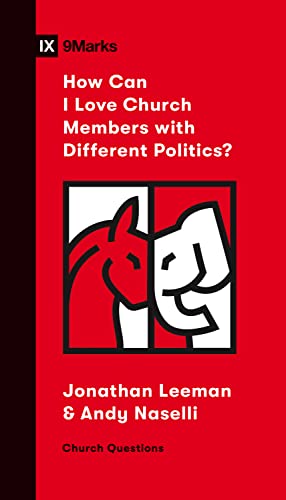
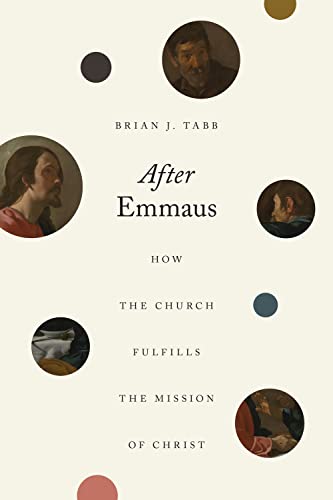
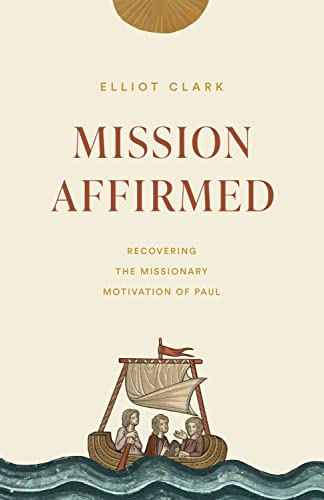
|
|
 |  |  | | Mark as the Backstory to the Gospel: Mark 1:1 as a Key to Mark’s Gospel | | BY PETER ORR | | This article argues that the first words of the Gospel of Mark—“the beginning of the Gospel”—are best understood as the title of the book. Mark identifies his work as a description of the origin or backstory of the preached gospel that his readers were familiar with. Orr examines what this implies for the relationship of Mark to Peter and Paul, then explores the implications of this understanding for reading Mark. | | | | 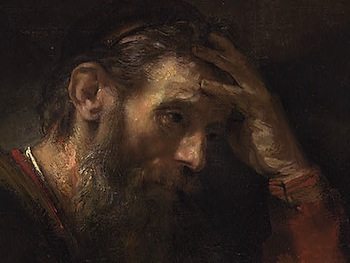 | | Rejecting Syncretism: Paul and the Python | | BY SCOTT D. MACDONALD | | Syncretism threatens Christian witness around the world. And the church in Africa continues to struggle with the popularity of local religious practices. In many locales, a religious diviner prominently features in the lives of many church-going people. In response, Acts 16:16–18 provides needed clarity concerning Christianity’s relationship to other religious powers and to syncretism. MacDonald outlines the religious backdrop of Philippi, Paul’s missionary method in the Greek religious context, and the consequences that arise from Paul’s exorcism of the πύθων. Paul’s reaction to the divining spirit of Philippi leaves no room for syncretistic behavior among Christians today. Accommodation and any reliance upon other religious powers compromises the quality of the gospel and the reputation of the savior. | | | | | The Fantasy of the Frantic Apostle: Paul and the Parousia | | BY ALLAN CHAPPLE | | There is a widespread belief that Paul understood his Gentile mission as the brief final chapter of salvation history, preceding—or even triggering—the imminent return of Jesus. First, Chapple discusses major problems that make this view implausible: Paul’s understanding of the extent of the world, of God’s saving purpose, and of his specific task, and what his plans and activities reveal. He then provides an alternative account of what the evidence discloses about the connections between Paul’s missionary convictions and activities and his beliefs about the end. | | Love, Hope, Faith: Christopher Nolan and the Apostle Paul in Dialogue | | BY EJ DAVILA | | This article examines Christopher Nolan’s three most recent films, Interstellar (2014), Dunkirk (2017), and Tenet (2020), through the lens of Christianity’s preeminent theological virtues: love, hope, and faith, respectively. In dialogue with the apostle Paul, Davila argues that Nolan takes Paul’s cruciform theology of virtue (consisting of vertical and horizontal relationships) and intentionally flattens it to the purely horizontal, resulting in a presentation of these virtues that, while emotive, ultimately strips them of their significance. | | Give Honor and Vote? A Reflection on the Christian’s Voting Conscience and Romans 13:1–7 | | BY ROBERT GOLDING | | Golding applies Paul’s instruction in Romans 13:1–7 to Christian voting behavior in the West. Since Paul tells the Romans to honor debauched pagans, Christians can vote for similarly debauched political candidates with clear consciences. There are clear distinctions between Paul’s teaching and the Western political context. However, the underlying continuities are clear and they are based in God’s sovereignty, not political structure. Furthermore, the ancient Roman practice of giving honor to rulers only regarded the office, not the office holder’s morality. | | The Standard-Bearer: Pastoral Suffering in the Theology of John Calvin | | BY LELAND BROWN | | Brown examines John Calvin’s theology of pastoral suffering, an overlooked but relevant aspect of his theology for pastors struggling with the trials and difficulties of ministry. Calvin pictured the pastor as the chief agent of edification for God’s people, and therefore, the primary target for the assaults of Satan. Pastors will therefore suffer in the ways that all believers suffer but also suffer peculiarly as pastors–especially from opposition in their churches, criticism, slander, and possibly martyrdom. Calvin encouraged pastors to prepare themselves for sufferings, to set their eyes on Christ, and to patiently and gently deal with those causing their sufferings. | | Hell for a Single Sin: A Response to Robert Golding’s Asymptotic Theory of Those in Hell | | BY PAUL DIRKS | | This article responds to Robert Golding’s recent essay, “Making Sense of Hell,” in which he contends for the logic of eternal punishment on the basis of a progressive and asymptotic conception of sin and sinners in hell. Dirks argues that this innovation is unnecessary and that both the Scriptures and the “infinite obligation” proof by Anselm of Canterbury demonstrate that hell is just and necessary for even a single sin. | | Gender Dysphoria and the Body-Soul Relationship | | BY EDMUND FONG | | After presenting the phenomenon of gender dysphoria as a state of consciousness experienced by the individual, Fong explores how the two major anthropological frameworks of materialism and substance dualism account for the conscious state of gender dysphoria. In particular, the article addresses the extent to which materialism and substance dualism support what Fong terms a “created but misplaced being” scenario, where it is claimed that an individual could be created with an “inner” self gendered one way but placed in a body of a different biological sex. He concludes with three theological insights into gender dysphoria. | | Church-State Relations: Lessons from China | | BY LUKE WESLEY | | This article delineates various biblical principles that circumscribe the church’s relationship to the state. In addition to more general principles, these include the recognition that the mission of the organized church is distinct from that of individual Christians, that political institutions tend to become anti-Christ and oppressive, and that our context will determine the extent to which the church can exercise its prophetic voice. In view of these principles and on the basis of his experience in China, the author highlights five theological truths that will inevitably be challenged by totalitarian governments. Our faithfulness or lack thereof will hinge on our response to these challenges. | |

|
|
Themelios is a peer-reviewed international evangelical theological journal that expounds on the historic Christian faith. Its primary audience is theological students, pastors and scholars. It was formerly a print journal operated by RTSF/UCCF in the UK, and it became a digital journal operated by The Gospel Coalition in 2008.
|
|
©2022 The Gospel Coalition, All Rights Reserved.
P.O. Box 170346 — Austin, TX 78717
Update Email | Unsubscribe
|
|