







 One of the foremost challenges for Christians in their communication of the gospel is bridging the seemingly vast chasm of gospel relevance. We often feel like we are speaking a martian language when we open our mouths and begin to talk about a sin-cursed world, evil, redemption, and a Savior.
In one sense this is absolutely true and in another it is not.
It is true in the specific sense. The substitutionary work of Christ, as promised by the Scriptures and accomplished in time by Jesus, is an alien concept. Blood, wrath, substitution, and resurrection seem like ancient concepts from a distant land.
But then in a general sense they are not. They are on the front burner. In fact, it is assumed that we have these categories.
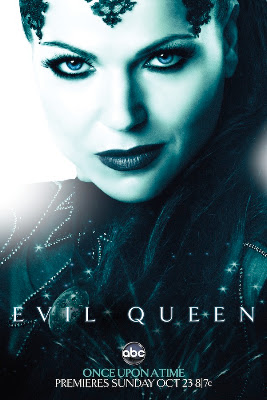
Take for example, ABC’s new series Once Upon a Time. Based upon the pilot episode, this series is banking pretty heavily on a biblical structure.
The basic storyline (as it has been laid out so far) is this: you have a fantasy world where all of the heros of the various fairy tales live. There is also a witch (think Snow White). In effort to destroy Snow White and Prince Charming she brings a curse upon the world that traps them in time, saps their joy, and renders their experience to be far less than what they had previously enjoyed. This curse seems to be unconquerable until someone who knows the future (Rapunzel) tells the mother and father that their child will bring redemption. The child will destroy the evil one and rescue the people from the curse. They begin to call this baby the Savior. The child is hid away and thrust into our world (non-fairy tale) in order to come and rescue those under the curse.
I know this is just the first episode, however, the producers have laid a lot of their cards down in the pilot. In order to make this story compelling and believable they rely heavily upon the biblical (gospel) construct. (This is not new).
To be honest, I really don’t care if you watch the show. I think the story is interesting and well-done but not must-see-TV (whatever that is). However, I do want you to at least observe the fact that the story that ABC is leveraging their resources to promote this Fall sounds very much similar to the gospel song, even if it doesn’t hit all of the notes. This should give Christians great encouragement that there is at least a workable frame of reference of the gospel story. The general terms have traction. People can relate to sin (and curse), promise, redemption, and restoration. Therefore, it should not be seen as an insurmountable challenge to communicate the gospel to an unbeliever; you can show how the gospel completes their own narrative. These are not foreign concepts.
On the other hand, it is still foolishness (1 Cor. 1.18). It is still alien. There is a big difference between understanding things conceptually and believing things whole-heartedly. The difference is between watching a story and being thrust into it. There is a difference between being entertained and being converted. We know that ultimately it is only God who brings new life (1 Peter 1.3-5). Therefore, we pray and speak with faithfulness, humility and zeal.